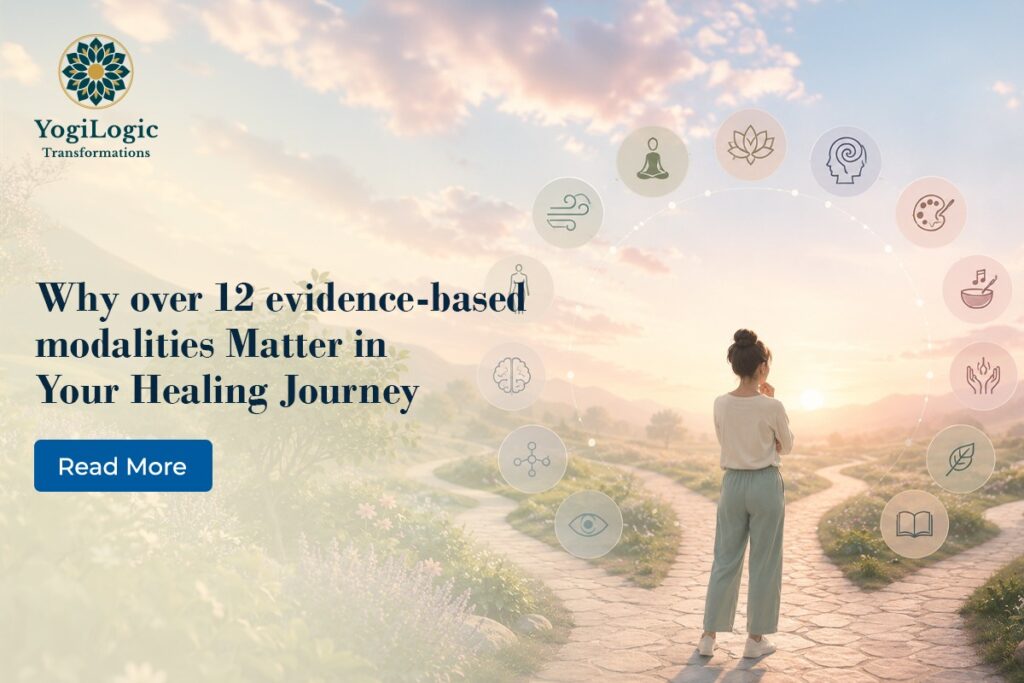
In the intricate landscape of mental health and personal growth, the quest for effective support often leads individuals down various paths. Many encounter the frustration of a “one-size-fits-all” approach to therapy, where a single methodology is applied universally, regardless of the unique nuances of an individual’s challenges. This can lead to prolonged struggles, feelings of stagnation, and a disheartening belief that healing is elusive. At YogiLogic Transformations, we fundamentally reject this limited perspective. Our philosophy is rooted in the understanding that true transformation requires a bespoke approach, one that is as diverse and complex as the human experience itself. This is why we integrate over 12 distinct psychotherapeutic modalities into our practice, ensuring that your healing journey is not just supported, but precisely tailored to your specific needs, guiding you from complexity to clarity with unparalleled precision.
The Problem with a Singular Approach
Imagine trying to fix a complex machine with only one tool. While that tool might be effective for a specific component, it would be utterly inadequate for the machine as a whole. The human psyche is infinitely more intricate than any machine, and yet, traditional therapy often relies on a singular therapeutic lens. This can be problematic for several reasons:
Limited Scope: No single modality can address the full spectrum of human psychological distress. What works for anxiety might not be optimal for trauma, and what helps with relationship issues might not resolve career stagnation.
Client Mismatch: Individuals respond differently to various therapeutic styles. Some thrive with cognitive restructuring, while others benefit more from body-centered awareness or perspective-shifting techniques. A rigid approach fails to account for these individual differences.
Stagnation: When progress stalls, a therapist relying on a single modality may have limited options for pivoting or introducing new perspectives, leading to client frustration and dropout.
Our commitment to a multi-modal approach stems from a deep respect for the individual and a pragmatic understanding of what truly facilitates profound and lasting change.
Breaking Down the Acronyms: A Glimpse into Our Toolkit
Our extensive toolkit of over 12 psychotherapeutic modalities allows us to dynamically adapt our strategies to your evolving needs. Here, we briefly explain some of the key ‘Logic’ tools we frequently employ, demonstrating their unique contributions to your healing process:
Cognitive Behavioral Therapy (CBT)
CBT is a foundational modality that helps individuals identify and challenge unhelpful thought patterns and behaviors. It’s particularly effective for conditions like anxiety, depression, and phobias. For example, if you consistently catastrophize about future events, CBT provides structured techniques to examine the evidence for and against such thoughts, ultimately helping you develop more balanced and realistic perspectives. It’s the logical framework for understanding how your thoughts influence your feelings and actions.
Acceptance and Commitment Therapy (ACT)
ACT shifts the focus from controlling or eliminating unwanted thoughts and feelings to accepting them as part of the human experience. It then guides individuals to commit to actions aligned with their deeply held values. If you’re struggling with chronic pain or persistent negative self-talk, ACT helps you learn to coexist with these internal experiences without letting them dictate your life choices. It’s about creating a rich, full, and meaningful life with your challenges, rather than waiting for them to disappear.
Rational Emotive Behavior Therapy (REBT)
REBT, a precursor to CBT, directly confronts irrational beliefs that lead to emotional distress. It’s a highly directive and philosophical approach that teaches individuals to identify, dispute, and replace self-defeating beliefs with more rational and constructive ones. For instance, if you believe you must be perfect to be loved, REBT helps you logically dismantle this demand, fostering greater self-acceptance and reducing anxiety stemming from unrealistic expectations.
Neuro-Linguistic Programming (NLP)
NLP explores the connection between neurological processes (neuro), language (linguistic), and behavioral patterns learned through experience (programming). It offers powerful techniques for understanding and changing subjective patterns of thinking and behavior. For someone struggling with a phobia, NLP might involve techniques to reframe past experiences or model successful coping strategies. It’s about understanding the ‘language’ of your mind and ‘reprogramming’ it for more resourceful outcomes.
Emotional Regulation Training
While emotional regulation training is comprehensive, its skills-based components are invaluable. These include mindfulness, distress tolerance, emotion regulation, and interpersonal effectiveness. For individuals struggling with intense emotional swings or relationship difficulties, Emotional regulation techniques provide concrete, practical strategies to manage overwhelming emotions, navigate crises without making things worse, and build healthier relationships. It’s a practical ‘Logic’ for emotional mastery.
Solution – Focused Brief Therapy (SFBT)
SFBT is a future-oriented, goal-directed approach that focuses on solutions rather than problems. It helps clients identify their strengths and resources and build upon them to create desired changes. Instead of dwelling on the past, SFBT guides you to envision your preferred future and take small, actionable steps towards it. It’s a pragmatic ‘Logic’ for rapid progress and empowerment.
This diverse array of modalities is not simply a list of options; it represents a dynamic, integrated system. Each tool serves a specific purpose, and our expertise lies in discerning which ‘Logic’ is most appropriate for your unique situation at any given moment.
The Assessment Phase: Precision in Practice
At YogiLogic Transformations, the journey begins with a thorough and confidential consultation. This initial step is crucial for establishing a ‘Safe Therapeutic Container’ and, more importantly, for conducting a comprehensive assessment. This isn’t a superficial intake; it’s a deep dive into your unique situation, your challenges, and your goals. We meticulously analyze:
Presenting Issues: What are the primary concerns bringing you to us?
Underlying Patterns: Are there recurring thoughts, emotions, or behaviors that contribute to your difficulties?
Personal History: Relevant life experiences, including past traumas or significant relationships.
Strengths and Resources: What are your inherent capacities and external supports?
Values and Aspirations: What truly matters to you, and what kind of life do you envision?
Based on this holistic understanding, we then co-create a structured, strategic plan for your transformation. This is where the ‘Logic’ truly comes alive. Drawing from our extensive knowledge of the over 12 evidence-based modalities, we select and integrate the specific tools best suited to help you. This personalized approach ensures that every intervention is purposeful, targeted, and maximally effective, avoiding the inefficiencies of a generic treatment plan.
Integration and Action: Where Theory Meets Transformation
The power of our multi-modal approach extends beyond mere selection; it lies in the skillful integration of these diverse ‘Logic’ tools with the mindful inner work of the ‘Yogi’. The modalities are not applied in isolation; they are woven together to create a cohesive and dynamic therapeutic experience. For example:
CBT might help you identify a negative thought pattern, while ACT helps you accept the discomfort of challenging it, and a ‘Yogi’ mindfulness practice helps you observe the thought without judgment.
Emotional regulation techniques might provide concrete strategies for emotion regulation, while NLP helps you reframe the narrative around those emotions, and a ‘Yogi’ breathwork practice helps you ground yourself in the present moment.
This synergistic approach moves beyond theoretical understanding to practical application. Through our sessions, you will actively apply the ‘Logic’ (the tools) to access the ‘Yogi’ – your ‘Core Self’ and ‘Inner Strength’. This is the process of “unfolding growth,” where you will build new skills, process trauma, challenge limiting beliefs, and integrate different parts of yourself (thoughts, emotions, and body). The result is not just a temporary fix, but a profound and sustainable transformation that equips you with the inner resilience and emotional literacy to navigate future challenges with confidence and purpose.
Conclusion
Your healing journey is profoundly personal, and it deserves an approach that honors its unique contours. The decision to integrate over 12 psychotherapeutic modalities at YogiLogic Transformations is a testament to our commitment to providing the most effective, compassionate, and tailored support available. We believe that by combining the analytical precision of ‘Logic’ with the mindful depth of ‘Yogi’, we offer a pathway that transcends the limitations of singular approaches, leading you not just to symptom reduction, but to a state of sustainable clarity, inner strength, and authentic well-being. Do not settle for less than a truly personalized transformation. Your complex journey deserves a comprehensive solution.
Ready to experience a truly tailored approach to your mental wellness? Contact YogiLogic Transformations today to learn more about our multi-modal services and schedule your confidential consultation. Your unique path to clarity awaits.