Introduction
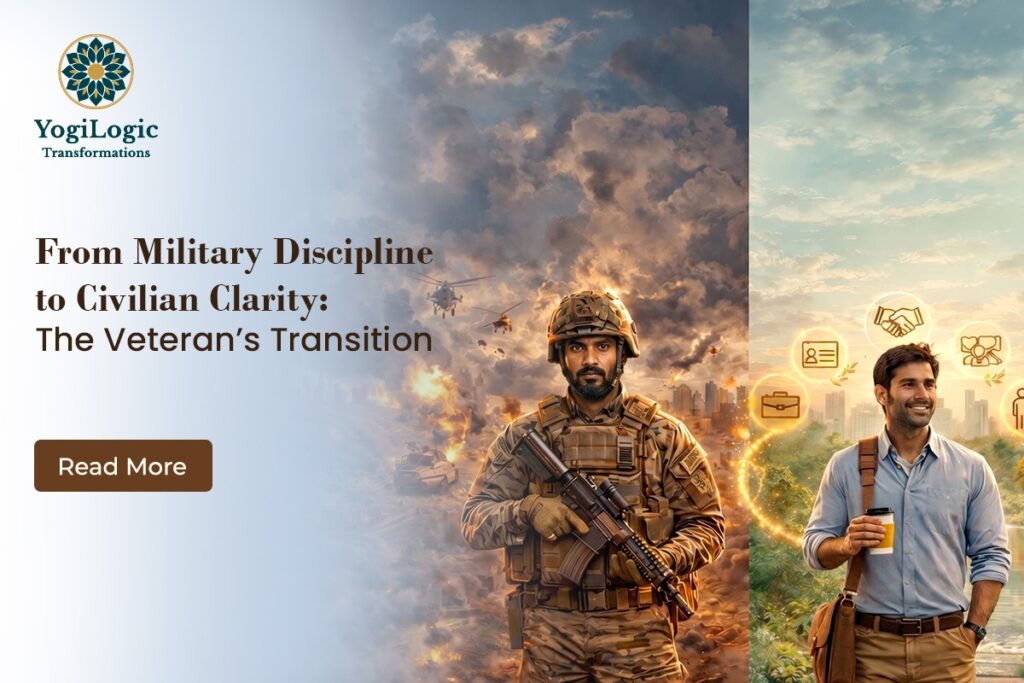
For those who have served in the military, the transition back to civilian life is often portrayed as a simple return home. However, the reality is far more complex. It is a profound cultural shift, a journey from a highly structured, mission-driven environment to a world that can feel ambiguous, individualistic, and often disorienting. The ingrained discipline, camaraderie, and clear sense of purpose that define military service are suddenly replaced by a landscape where personal identity, career paths, and social connections must be painstakingly redefined. This profound shift can trigger significant challenges, including a loss of identity, difficulty translating skills, and a struggle to find new meaning. At YogiLogic Transformations, we understand that this transition is not merely an adjustment but a transformation. Our unique ‘Logic meets Yogi’ approach provides a comprehensive framework to navigate the complexities of post-service life, guiding veterans from the structured discipline of military life to a state of profound civilian clarity and renewed purpose.
The Profound Culture Shock: Loss of Identity and Structure
Leaving the military is often akin to stepping into an entirely new country, with different customs, languages, and expectations. The culture shock can be immense, leading to feelings of isolation, confusion, and a deep sense of loss. Veterans often grapple with:
- Loss of Identity: The military provides a clear identity, rank, and role. In civilian life, this can be replaced by ambiguity, leaving veterans asking, “Who am I now?”
- Loss of Purpose: Military service is often driven by a clear mission. Finding a new, equally compelling purpose in civilian life can be a significant challenge.
- Loss of Camaraderie: The deep bonds forged in service are often unparalleled in civilian society, leading to feelings of loneliness and disconnection.
- Structural Disorientation: The highly structured, hierarchical nature of military life contrasts sharply with the often-unstructured and individualistic civilian world, making adaptation difficult.
- Difficulty Translating Skills: Skills honed in combat or specialized military roles may not directly translate to civilian job descriptions, leading to frustration and underemployment.
These challenges are not signs of weakness but normal responses to an extraordinary transition. Acknowledging the depth of this cultural shift is the first step towards building a bridge back to civilian clarity.
Leveraging the ‘Logic’: Military Discipline as a Civilian Asset
One of the most powerful assets a veteran possesses is the ingrained ‘Logic’ of military discipline. This is not something to be shed but rather a powerful foundation upon which to build a successful civilian life. Our ‘Logic’ framework helps veterans recognize, reframe, and strategically apply these invaluable skills to their new environment.
Strategic Application of Military Skills
Military training instills a unique set of skills that are highly transferable to the civilian world, though they may need to be reframed. These include:
- Problem-Solving: The ability to assess complex situations under pressure and devise effective solutions.
- Leadership: Experience leading teams, making critical decisions, and inspiring others.
- Adaptability: The capacity to adjust to rapidly changing circumstances and learn new skills quickly.
- Teamwork: A deep understanding of collaboration and mutual support.
- Resilience: The ability to persevere through adversity and recover from setbacks.
Our approach helps veterans logically deconstruct their military experiences, identifying the core competencies developed and translating them into language that resonates with civilian employers and social contexts. For example, a combat medic’s ability to remain calm and make critical decisions under fire can be reframed as exceptional crisis management and leadership skills in a corporate setting. This analytical process empowers veterans to see their service not just as a past chapter, but as a powerful training ground for future success.
Structured Goal Setting and Planning
Military life thrives on clear objectives and meticulous planning. This ‘Logic’ can be directly applied to civilian transition. We guide veterans in:
- Defining New Missions: Helping them identify new personal and professional goals that resonate with their values and passions.
- Strategic Planning: Breaking down complex civilian goals (e.g., career change, higher education, starting a business) into actionable, measurable steps.
- Resource Identification: Logically identifying and leveraging available resources, including veteran benefits, educational programs, and professional networks.
By applying the same disciplined, strategic thinking that characterized their military service, veterans can create clear roadmaps for their civilian lives, reducing uncertainty and fostering a sense of control.
The ‘Yogi’ Work of Redefining Purpose: Processing Experiences and Finding New Meaning
While ‘Logic’ provides the structure, the ‘Yogi’ component addresses the profound emotional and spiritual journey of redefining purpose and processing the experiences of service. This is the inner work required to integrate past experiences, heal unseen wounds, and connect with a new sense of meaning that transcends military identity.
Processing the Experiences of Service
Many veterans carry the weight of their service, including exposure to trauma, moral injuries, and the psychological burden of combat. The ‘Yogi’ approach provides a safe, compassionate space to process these experiences. This involves:
- Mindful Reflection: Gently exploring memories and emotions associated with service without judgment, allowing for integration rather than suppression.
- Body-Based Practices: Engaging body-based techniques (e.g., breathwork, gentle movement) to release stored tension and trauma, helping the nervous system to regulate.
- Narrative Re-authoring: Helping veterans to construct a coherent narrative of their service that honors their experiences while integrating them into their civilian identity, moving from victimhood to survivor and thriver.
This inner work is crucial for healing unseen wounds and preventing the past from dictating the future. It’s about making peace with what was, so one can fully embrace what is to come.
Finding a New Sense of Purpose
One of the most significant challenges for veterans is finding a new sense of purpose that rivals the profound meaning often found in military service. The ‘Yogi’ approach guides individuals in reconnecting with their ‘Core Self’ to identify new passions, values, and contributions. This might involve:
- Values Clarification: Deep dives into what truly matters to them now, post-service.
- Meaning-Making: Exploring how their unique experiences and skills can be leveraged to serve a new mission in civilian life, whether through career, volunteerism, or personal pursuits.
- Mindful Exploration: Encouraging open-minded exploration of new interests and opportunities, allowing purpose to emerge organically rather than being forced.
This process helps veterans to build a new foundation of meaning, one that is authentic to their evolving civilian identity and provides a powerful drive for their future.
Building a New Container: Creating a Supportive Environment
The integration of ‘Logic’ and ‘Yogi’ culminates in building a new, supportive container for sustainable growth post-service. This involves creating an environment—both internal and external—that fosters well-being, connection, and continued development.
Our integrated process guides veterans through:
- Honoring Service (Yogi): Acknowledging and validating the profound experiences and sacrifices of military service.
- Skill Translation (Logic): Systematically identifying and reframing military skills for civilian application.
- Trauma Integration (Yogi): Providing a safe space and tools to process and heal from service-related trauma.
- Purpose Redefinition (Logic & Yogi): Co-creating new missions and goals aligned with evolving values and passions.
- Community Building (Logic & Yogi): Facilitating connections with supportive networks, both veteran and civilian, to combat isolation and foster belonging.
This comprehensive framework ensures that veterans are not just surviving civilian life but thriving in it, equipped with the tools and inner resources to build a fulfilling and meaningful future.
Conclusion
The transition from military to civilian life is a heroic journey in itself, fraught with unique challenges but also immense opportunities for growth. By embracing the analytical rigor of ‘Logic’ to leverage military discipline and strategically plan for the future, and by engaging in the compassionate inner work of ‘Yogi’ to process experiences and redefine purpose, veterans can navigate this profound shift with clarity and confidence. YogiLogic Transformations offers a unique and empathetic pathway for those who have served, understanding that their journey from military discipline to civilian clarity is a testament to their enduring strength and resilience. You do not have to navigate this transition alone. We understand the unique challenges, and we are here to help you find sustainable clarity and renewed purpose.
Are you a veteran ready to transform your transition into a powerful new chapter? Explore our Veteran & Family Support programs at YogiLogic Transformations. Contact us today to schedule a confidential consultation and begin building your fulfilling civilian life.