
The Psychology of Military to Civilian Transition: Why Veterans Struggle and What Evidence Based Intervention Offers
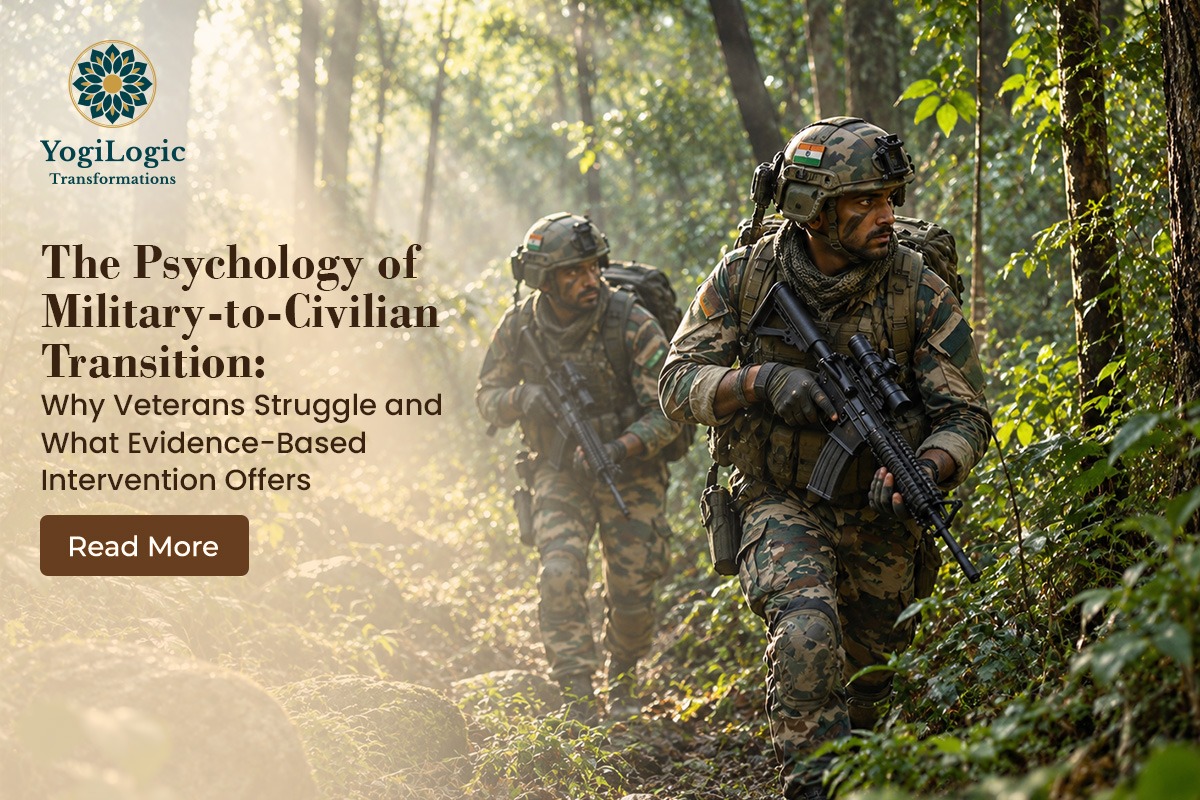
The transition from military service to civilian life is often described as a career change. In reality, it is much more profound. For many veterans, leaving the armed forces involves rebuilding identity, relationships, purpose, and daily structure after years of living within a unique professional and cultural environment. While some individuals adapt smoothly, others experience emotional challenges that affect their wellbeing, careers, and family life.
Understanding the psychology of military to civilian transition is essential for creating effective support systems. At YogiLogic Transformations, we believe that successful transition requires more than practical career guidance. It demands evidence based psychological interventions that help veterans rediscover meaning, strengthen resilience, and confidently embrace a new chapter of life.
Written by YogiLogic Transformations
Military service as a total identity context
Military service shapes far more than professional skills. It influences personal identity, values, behaviour, relationships, communication, and worldview.
From the beginning of military training, individuals develop a strong sense of discipline, responsibility, teamwork, courage, and commitment to a shared mission. Daily routines, operational responsibilities, leadership expectations, and organisational culture become deeply integrated into personal identity.
Unlike many civilian occupations, military life often becomes a complete identity context where profession, community, lifestyle, and personal purpose are closely connected.
This deep integration provides stability, belonging, and meaning throughout service. However, it also means that leaving military life involves much more than changing employment. It often requires rebuilding fundamental aspects of self identity.
What is lost in transition rank role community and meaning
One of the greatest psychological challenges during military transition involves recognising what has been left behind.
Rank provides structure, responsibility, and professional recognition.
Role offers clarity regarding duties, expectations, and contribution.
Community creates trust, mutual support, and lifelong friendships developed through shared experiences.
Meaning emerges from serving something larger than personal success.
When military service ends, many veterans experience the simultaneous loss of these important psychological foundations.
Civilian workplaces often operate differently from military organisations. Decision making, communication, leadership expectations, and organisational culture may feel unfamiliar or less structured.
Many veterans also miss the strong sense of belonging and shared purpose that military service naturally provides.
Without recognising these losses, individuals may incorrectly interpret normal adjustment challenges as personal failure rather than expected aspects of transition.
The psychological stages of military civilian adjustment
Military to civilian adjustment usually unfolds gradually rather than occurring immediately after retirement or discharge.
The first stage often involves anticipation where excitement about future opportunities exists alongside uncertainty regarding the unknown.
The second stage may involve disorientation as veterans encounter unfamiliar routines, different workplace cultures, and reduced organisational structure.
The third stage frequently includes reflection where individuals begin evaluating previous experiences while questioning future direction and personal identity.
Gradually, adaptation develops as new routines, relationships, and professional roles become established.
Finally, integration occurs when veterans successfully combine military values with civilian opportunities, creating a balanced identity that honours past service while embracing future growth.
Understanding these stages helps reduce unnecessary self criticism by recognising that adjustment is a natural psychological process rather than a sign of weakness.
Identity disruption and reconstruction in veterans
Identity reconstruction represents one of the most important psychological tasks following military service.
Veterans often ask themselves important questions.
Who am I without the uniform
What purpose now guides my life
How do I apply military strengths within civilian environments
These questions reflect identity disruption rather than personal inadequacy.
Healthy reconstruction involves recognising that military identity remains an important part of life without becoming the only source of self worth.
Veterans possess valuable qualities including leadership, discipline, resilience, integrity, teamwork, adaptability, and commitment. These strengths remain relevant long after active service concludes.
Evidence based psychotherapy helps individuals integrate these strengths into new careers, family relationships, community involvement, and personal aspirations.
Rather than abandoning military identity, successful transition expands identity to include new roles while preserving deeply held values.
Specific risk factors for poor transition outcomes
Although every transition experience is unique, certain factors increase vulnerability to adjustment difficulties.
Limited social support may increase feelings of isolation after leaving close military communities.
Unresolved trauma or chronic stress may complicate emotional adjustment and everyday functioning.
Loss of professional purpose may reduce motivation and confidence during career transitions.
Difficulty translating military experience into civilian employment can contribute to frustration and financial uncertainty.
Relationship challenges may arise as family roles change following retirement or discharge.
Perfectionism and excessive self reliance sometimes discourage veterans from seeking professional psychological support.
These challenges do not indicate personal weakness. They represent understandable responses to significant life change.
Early recognition and appropriate intervention greatly improve long term psychological wellbeing.
Evidence based interventions that support transition
Modern psychological research provides numerous evidence based approaches that effectively support military to civilian transition.
Cognitive Behavioural Therapy helps individuals identify unhelpful thinking patterns while developing healthier perspectives and coping strategies.
Acceptance and Commitment Therapy strengthens psychological flexibility by helping veterans move toward personally meaningful goals despite emotional discomfort.
Positive Psychotherapy encourages individuals to recognise existing strengths while building hope, confidence, and purpose.
Mindfulness Based Cognitive Therapy improves emotional regulation, reduces cognitive reactivity, and strengthens resilience during periods of uncertainty.
Solution Focused Brief Therapy helps clients identify practical solutions and achievable goals based upon existing personal resources.
Transactional Analysis enhances communication, relationship awareness, and interpersonal effectiveness.
At YogiLogic Transformations these approaches are thoughtfully integrated according to individual needs rather than relying upon a single therapeutic model.
This personalised framework supports emotional recovery, identity reconstruction, career adaptation, resilience, and long term wellbeing.
Lt Col Vijay as lived example transition from the inside
The philosophy of YogiLogic Transformations is grounded not only in professional psychological expertise but also in lived experience.
Lt Col Siddhartha Vijay served more than twenty two years in the Indian Army including leadership appointments within elite Special Forces and Infantry units. Throughout his military career he led high performance teams, managed complex operational environments, and navigated demanding leadership responsibilities.
His own transition from command to counselling provides valuable insight into the emotional realities of military life beyond theoretical understanding.
Today, as a practising psychologist, psychotherapist, certified life coach, and resilience trainer, he combines operational leadership with expertise across fourteen evidence based psychotherapeutic modalities including Cognitive Behavioural Therapy, Acceptance and Commitment Therapy, Rational Emotive Behaviour Therapy, Positive Psychotherapy, Mindfulness Based Cognitive Therapy, Neuro Linguistic Programming, and Solution Focused Brief Therapy.
This unique combination enables veterans, military families, professionals, and corporate leaders to receive guidance informed by both scientific knowledge and genuine lived experience.
At YogiLogic Transformations our mission is to help every client move from complexity to clarity while developing emotional strength, meaningful purpose, and sustainable personal growth.
Conclusion
Military to civilian transition represents one of the most significant psychological adjustments many veterans will ever experience. The process involves far more than changing careers. It requires rebuilding identity, redefining purpose, strengthening relationships, and creating new pathways for personal fulfilment.
With appropriate evidence based psychological support, veterans can transform transition into an opportunity for growth rather than viewing it solely as a period of loss.
At YogiLogic Transformations we combine military leadership experience with evidence based psychotherapy to support veterans, military families, professionals, and organisations through meaningful personal transformation. By integrating scientific methods with compassionate guidance, we help individuals preserve the strengths developed through military service while confidently building rewarding civilian lives.
Frequently Asked Questions
Why is military to civilian transition psychologically challenging
Military service shapes identity, purpose, relationships, and daily life. Transition requires adapting to new environments while rebuilding personal and professional identity.
What emotional challenges do veterans commonly experience during transition
Veterans may experience uncertainty, loss of purpose, identity disruption, career adjustment difficulties, relationship changes, stress, and reduced sense of community during transition.
Which therapies support military transition
Evidence based approaches including Cognitive Behavioural Therapy, Acceptance and Commitment Therapy, Positive Psychotherapy, Mindfulness Based Cognitive Therapy, Solution Focused Brief Therapy, and Transactional Analysis can effectively support transition and resilience.
Can military leadership skills transfer to civilian careers
Yes. Leadership, discipline, resilience, teamwork, adaptability, communication, and decision making developed during military service remain highly valuable across civilian professions.
How does YogiLogic Transformations support veterans
YogiLogic Transformations provides personalised counselling, resilience coaching, trauma informed psychotherapy, career transition support, relationship guidance, and performance coaching using an integrated framework of fourteen evidence based psychotherapeutic modalities.
Why choose YogiLogic Transformations
Led by Lt Col Siddhartha Vijay, YogiLogic Transformations combines more than twenty two years of military leadership experience with professional expertise in psychology and psychotherapy. Our unique approach helps veterans, families, professionals, and leaders move from complexity to clarity while building resilience, emotional wellbeing, and sustainable peak performance.
Related Articles

Neuro-Linguistic Programming in Clinical Practice: Beyond the Myths, Into the Method
October 8, 2026

The Infantry Officer's Guide to Managing Ambiguity: Psychological Lessons for Corporate Decision-Makers
September 28, 2026

Positive Psychotherapy: Building Strengths Not Just Addressing Deficits The Philosophy Behind YogiLogic Growth Framework
September 15, 2026