
Introduction
In the whirlwind of modern life, where instant gratification and rapid responses are often glorified, many of us find ourselves caught in a relentless cycle of reactivity. A sharp word from a colleague, an unexpected email, a frustrating traffic jam – these everyday occurrences can trigger an automatic, often unhelpful, response. We snap, we lash out, we withdraw, or we ruminate, only to regret our actions later. This impulsive behavior, driven by our primal fight-or-flight instincts, often exacerbates conflicts, damages relationships, and leaves us feeling drained and out of control. But what if there was a simple, yet profoundly powerful, technique to break this cycle? At YogiLogic Transformations, we advocate for the transformative power of the ‘Pause’ – a micro-moment of intentional stillness that creates a crucial space between stimulus and response. Our unique ‘Logic meets Yogi’ approach teaches individuals how to cultivate this pause, empowering them to move from automatic reactions to thoughtful, intentional responses, thereby fostering greater emotional regulation, improved relationships, and a profound sense of inner peace.
Reacting vs. Responding: Understanding the Difference
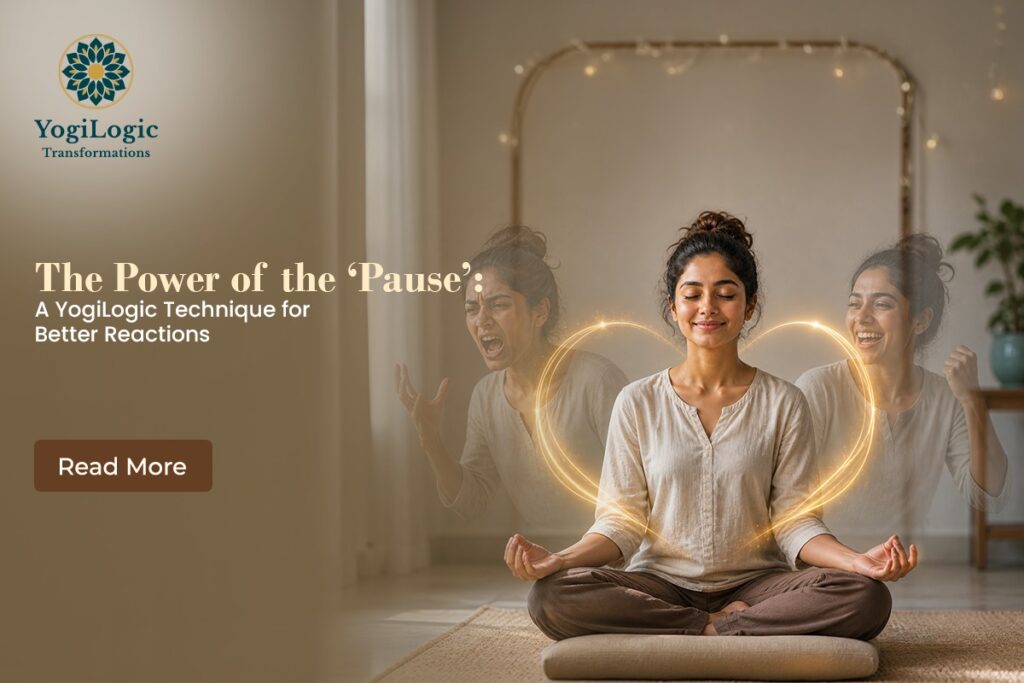
Before we can master the pause, it’s essential to understand the fundamental difference between reacting and responding:
- Reacting: This is an automatic, often unconscious, behavior driven by emotion or habit. It’s typically fast, impulsive, and can be fueled by fear, anger, or frustration. Reactions often lead to outcomes we later regret because they bypass our rational thought processes.
- Responding: This is a conscious, intentional choice. It involves taking a moment to process information, consider options, and then choose an action that aligns with our values and goals. Responses are typically slower, more thoughtful, and lead to more constructive outcomes.
Our brains are wired for survival, meaning our amygdala (the brain’s emotional center) can trigger a rapid, reactive response before our prefrontal cortex (the rational, decision-making part) has a chance to fully process the situation. This is often referred to as an “amygdala hijack,” and it’s why we sometimes say or do things in the heat of the moment that we later wish we hadn’t. The goal of the ‘Pause’ is to reclaim control from this automatic hijack.
The ‘Logic’ of the Reaction: The Neuroscience of Impulsivity
From a ‘Logic’ perspective, understanding the neuroscience behind our reactive tendencies is the first step towards gaining control. When we perceive a threat ( whether real or imagined ), our brain initiates a rapid sequence of events:
- Sensory Input: Information from our senses (sight, sound, etc.) travels to the thalamus.
- Amygdala Activation: The thalamus sends a quick, unfiltered signal to the amygdala, which rapidly assesses for danger.
- Fight – or – Flight Response: If the amygdala perceives a threat, it triggers the sympathetic nervous system, releasing stress hormones like adrenaline and cortisol. This prepares the body for immediate action.
- Prefrontal Cortex Bypass: In this rapid sequence, the signal to the prefrontal cortex (our rational brain) is often delayed or diminished, meaning our capacity for logical thought and impulse control is temporarily reduced.
This explains why, when someone cuts us off in traffic, our immediate, logical thought might be to honk aggressively or yell, even though we know it won’t change the situation and might even escalate it. The ‘Logic’ of understanding this biological process helps us to depersonalize our reactions, recognizing them as a hardwired survival mechanism rather than a personal failing. This awareness is crucial for creating the mental space needed to intervene.
The ‘Yogi’ of the Pause: Cultivating Space for Intentional Response
While ‘Logic’ helps us understand why we react, the ‘Yogi’ component provides the experiential tools to cultivate the ‘Pause’ – that crucial micro – moment between stimulus and response. This is about bringing mindfulness and self-awareness into the heat of the moment, allowing us to access our ‘Core Self’ and choose an intentional response.
How to Cultivate the Micro-Moment
The ‘Yogi’ of the Pause involves simple, yet powerful, practices that train our minds and bodies to create space:
- The Conscious Breath: This is the most accessible and immediate tool. When you feel a trigger, before you speak or act, take one deep, conscious breath. Inhale slowly, feeling your belly rise, and exhale slowly, feeling your body relax. This simple act sends a signal to your nervous system that you are safe, helping to disengage the fight – or – flight response and bring your prefrontal cortex back online.
- Body Scan Check – in: Briefly bring your awareness to your body. Where do you feel the tension? Is your jaw clenched? Shoulders tight? Noticing these physical sensations without judgment helps to ground you in the present moment and prevents emotional energy from spiraling out of control.
- Name the Emotion: Silently acknowledge the emotion you are feeling: “I am feeling angry,” “I am feeling frustrated.” Naming the emotion helps to create a slight distance from it, reducing its intensity and allowing for more objective observation.
- The “Stop” Technique: A mental or even physical “stop” can be effective. When you feel the urge to react, mentally say “STOP” to yourself. You can even physically put your hand up as a signal to yourself to pause.
These ‘Yogi’ practices are not about suppressing emotions but about creating a space to observe them, allowing them to pass without dictating your actions. This cultivation of inner stillness empowers you to access your ‘Core Self’ – that wise, centered part of you that can respond with clarity and intention.
The Impact on Relationships and Performance: Transforming Your Life
Mastering the ‘Pause’ has profound ripple effects, transforming not only your internal experience but also your external relationships and professional performance.
- Improved Relationships: In relationships, the ‘Pause’ can be a game-changer. Instead of reacting defensively to criticism or lashing out in anger, you can choose to respond with empathy and understanding. This leads to:
- Reduced Conflict Escalation: By pausing, you prevent arguments from spiraling into destructive patterns.
- Enhanced Communication: You can listen more effectively, express your needs more clearly, and engage in constructive dialogue.
- Deeper Trust and Connection: When others experience you as thoughtful and emotionally regulated, trust deepens, fostering more secure and fulfilling relationships.
- Elevated Performance: In professional settings, the ability to pause before reacting is a hallmark of effective leadership and high performance. It allows you to:
- Make Better Decisions: By engaging your rational brain, you can analyze situations more thoroughly and choose optimal solutions, especially in high-stakes scenarios.
- Manage Stress More Effectively: The consistent practice of pausing helps to regulate your nervous system, reducing chronic stress and preventing burnout.
- Lead with Greater Presence: A leader who can remain calm and centered amidst chaos inspires confidence and stability in their team, fostering a more productive and harmonious work environment.
Conclusion
The power of the ‘Pause’ is not a mystical secret but a practical, evidence-based technique that integrates the analytical understanding of ‘Logic’ with the mindful wisdom of ‘Yogi’. By understanding the neuroscience of reactivity and cultivating the micro-moment between stimulus and response, you can reclaim control over your emotions and actions. YogiLogic Transformations offers a comprehensive pathway to master this vital skill, empowering you to move from automatic reactions to thoughtful, intentional responses. This transformation will not only enhance your personal well-being but also profoundly improve your relationships and elevate your performance in every aspect of your life. It’s time to take control of your reactions and step into a life of greater clarity, connection, and peace.
Ready to master the power of the pause and transform your reactions? Learn more in our Personal Growth coaching at YogiLogic Transformations. Schedule a confidential consultation today and begin your journey to greater emotional regulation and intentional living.