Introduction
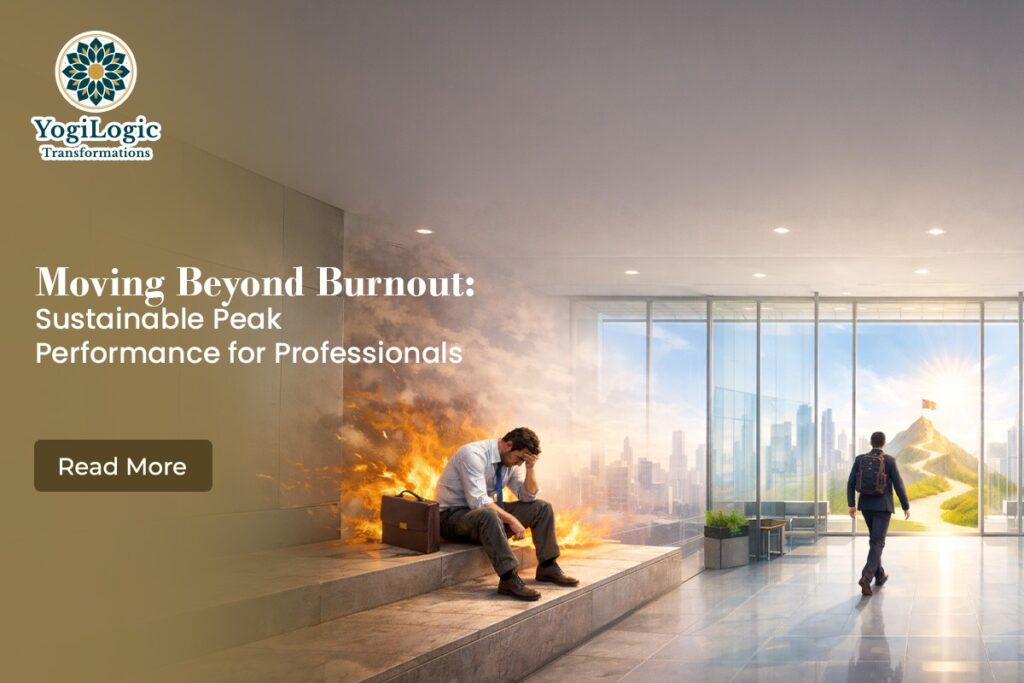
In the relentless pursuit of professional success, many individuals find themselves caught in a vicious cycle: the harder they work, the more exhausted they become, eventually leading to a state of profound physical, emotional, and mental depletion known as burnout. Often, the lines between dedication and self-destruction blur, with professionals mistakenly believing that constant overdrive is the only path to achieving their goals. This pervasive “hustle culture” not only jeopardizes individual well-being but also undermines long-term productivity and innovation within organizations. At YogiLogic Transformations, we understand that true peak performance is not about pushing past your limits until you break; it’s about cultivating a sustainable approach that integrates both rigorous strategy and mindful self-care. This article delves into the nuances of burnout, offering a pathway to move beyond its debilitating grip and achieve sustainable peak performance through our unique ‘Logic meets Yogi’ philosophy.
The Difference Between Stress and Burnout: Recognizing the Signs
While stress is a normal physiological response to demanding situations, burnout is a chronic state of emotional, physical, and mental exhaustion caused by prolonged or excessive stress. It’s crucial to differentiate between the two, as their management strategies differ significantly.
Stress is characterized by:
- Over-engagement: You’re still fighting, but you’re overwhelmed.
- Over-reactivity: You might be agitated, anxious, or irritable.
- Urgency and hyperactivity: A feeling of being rushed and unable to slow down.
- Primary damage is physical: Headaches, stomach problems, high blood pressure.
- Burnout, on the other hand, is characterized by:
- Disengagement: You’ve given up the fight; you feel helpless and hopeless.
- Blunted emotions: You might feel numb, empty, or indifferent.
- Helplessness and hopelessness: A sense that nothing you do matters.
- Primary damage is emotional: Detachment, depression, lack of motivation.
Recognizing these signs early is the first critical step. If you find yourself consistently feeling drained, cynical about your work, and experiencing a diminished sense of accomplishment, you might be on the path to burnout. Ignoring these signals only exacerbates the problem, leading to a deeper state of depletion that is harder to recover from.
The ‘Logic’ of Burnout: Analyzing the Systemic and Personal Factors
To effectively combat burnout, we must first understand its underlying mechanisms. The ‘Logic’ aspect of our approach involves a systematic analysis of both external (systemic) and internal (personal) factors that contribute to this debilitating condition. This analytical phase helps individuals identify core issues and underlying patterns, providing a clear, evidence-based framework for intervention.
Systemic Factors
Modern workplaces often inadvertently create environments ripe for burnout. These can include:
- Excessive workload: Unrealistic expectations and insufficient resources.
- Lack of control: Limited autonomy over tasks and decision-making.
- Insufficient reward: Feeling undervalued or unappreciated for efforts.
- Breakdown of community: Isolation, lack of support from colleagues or management.
- Unfairness: Perceived injustice in workload, compensation, or promotions.
- Conflicting values: A mismatch between personal values and organizational ethics.
Through a ‘Logic’ lens, we help professionals objectively assess their work environment. Is the workload genuinely unsustainable? Are there avenues for greater autonomy? By dissecting these external pressures, individuals can develop strategic plans to advocate for change, set healthier boundaries, or, if necessary, consider alternative professional paths.
Personal Factors
Beyond external pressures, certain personal patterns can predispose individuals to burnout. These often include:
- Perfectionism: An unrelenting drive for flawlessness, leading to excessive self-criticism.
- People-pleasing: Difficulty saying NO, leading to overcommitment and depletion.
- Lack of self-compassion: Harsh self-judgment and an inability to acknowledge one’s own efforts.
- Unrealistic expectations: Believing one must always be productive or constantly achieving.
- Poor coping mechanisms: Relying on unhealthy strategies like avoidance or overworking to manage stress.
Our ‘Logic’ framework utilizes modalities like Cognitive Behavioral Therapy (CBT) and Acceptance and Commitment Therapy (ACT) to identify and challenge these detrimental thought patterns. For instance, a professional who believes they must always be available to their team (a people-pleasing tendency) can use CBT to examine the rationality of this belief and develop strategies for setting healthier boundaries. ACT can help them accept the discomfort of saying NO, while committing to their value of self-care. This analytical process provides the intellectual tools to dismantle the internal drivers of burnout.
The ‘Yogi’ of Recovery: Reconnecting with Your Core Self
While ‘Logic’ helps us understand the what and why of burnout, the ‘Yogi’ aspect guides us through the how of recovery and sustainable well-being. This involves mindful inner work, reconnecting with your ‘Core Self’, and rediscovering purpose and energy. Burnout often leads to a profound sense of detachment – from work, others, and most importantly, from oneself. The ‘Yogi’ approach facilitates this crucial reconnection.
Rediscovering Purpose and Energy
Burnout strips away motivation and meaning. The ‘Yogi’ work involves practices that help individuals tap back into their intrinsic motivations and values. Through guided meditations, reflective journaling, and self-inquiry, professionals can rediscover what truly energizes them, both within and outside their careers. This isn’t about finding a new job; it’s about finding renewed meaning in one’s life, which can then be brought back into their professional endeavors.
The Role of Deep Rest and Mindful Integration
Recovery from burnout demands more than just a vacation; it requires deep, restorative rest and a mindful integration of self-care into daily life. The ‘Yogi’ approach emphasizes practices that regulate the nervous system, shifting it from a chronic state of ‘fight or flight’ to ‘rest and digest’.
- Mindfulness Practices: Simple daily mindfulness exercises, such as focused breathing or body scans, can help individuals become more attuned to their body’s signals of fatigue and stress, allowing for proactive intervention.
- Restorative Movement: Gentle yoga or stretching can release physical tension accumulated from prolonged stress, fostering a sense of ease and fluidity.
- Nature Connection: Spending time in nature has been scientifically proven to reduce stress and improve mood. Integrating regular walks or outdoor activities can be a powerful antidote to the demands of a desk-bound profession.
These ‘Yogi’ practices are not mere add-ons; they are essential components of a holistic recovery strategy. They help individuals rebuild their inner resources, fostering a sense of calm and resilience that prevents future depletion.
Building a Sustainable Framework: Long-Term Performance Without Sacrifice
The ultimate goal of moving beyond burnout is not just recovery, but the establishment of a sustainable framework for long-term peak performance. This involves a continuous integration of ‘Logic’ and ‘Yogi’ principles, creating a personalized strategy that honors both professional ambition and personal well-being.
Personalized Strategy for Long-Term Performance
This framework is highly individualized, co-created with our clients based on their unique circumstances and goals. It might include:
- Strategic Boundary Setting: Implementing clear boundaries around work hours, digital availability, and personal time, using ‘Logic’ to justify these decisions to oneself and others.
- Mindful Productivity: Applying ‘Yogi’ principles to work tasks, such as single-tasking, taking regular mindful breaks, and cultivating a sense of presence during work activities.
- Emotional Regulation Techniques: Utilizing ‘Logic’ tools like cognitive reappraisal and ‘Yogi’ practices like breathwork to manage stress and emotional reactivity in real-time.
- Values-Driven Action: Regularly checking in with one’s core values to ensure professional pursuits remain aligned with personal meaning, preventing a sense of emptiness or disillusionment.
This integrated approach ensures that professionals can achieve their highest potential without sacrificing their health, relationships, or inner peace. It’s about working smarter, living more fully, and leading with authenticity.
Conclusion
Burnout is not an inevitable consequence of ambition; it is a signal that our current approach to work and life is unsustainable. By embracing the YogiLogic Transformations methodology, professionals can move beyond the cycle of exhaustion and achieve a state of sustainable peak performance. This involves applying the analytical rigor of ‘Logic’ to understand the root causes of burnout and implementing the mindful practices of ‘Yogi’ to foster deep recovery and resilience. It is a journey from complexity to clarity, empowering individuals to not only excel in their careers but also to thrive in every aspect of their lives. Do not let burnout define your potential. It is a call to transform, and your path to lasting well-being and success begins now.
Ready to transform your relationship with work and achieve sustainable peak performance? Contact YogiLogic Transformations today to explore our bespoke corporate training and individual coaching programs. Your journey beyond burnout awaits.